Containment and negative air
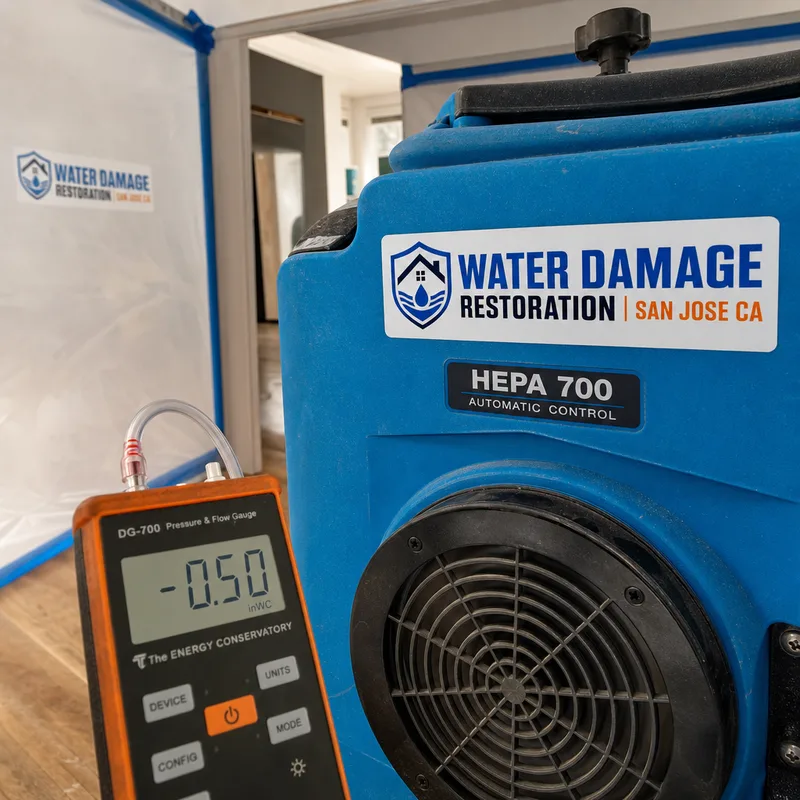
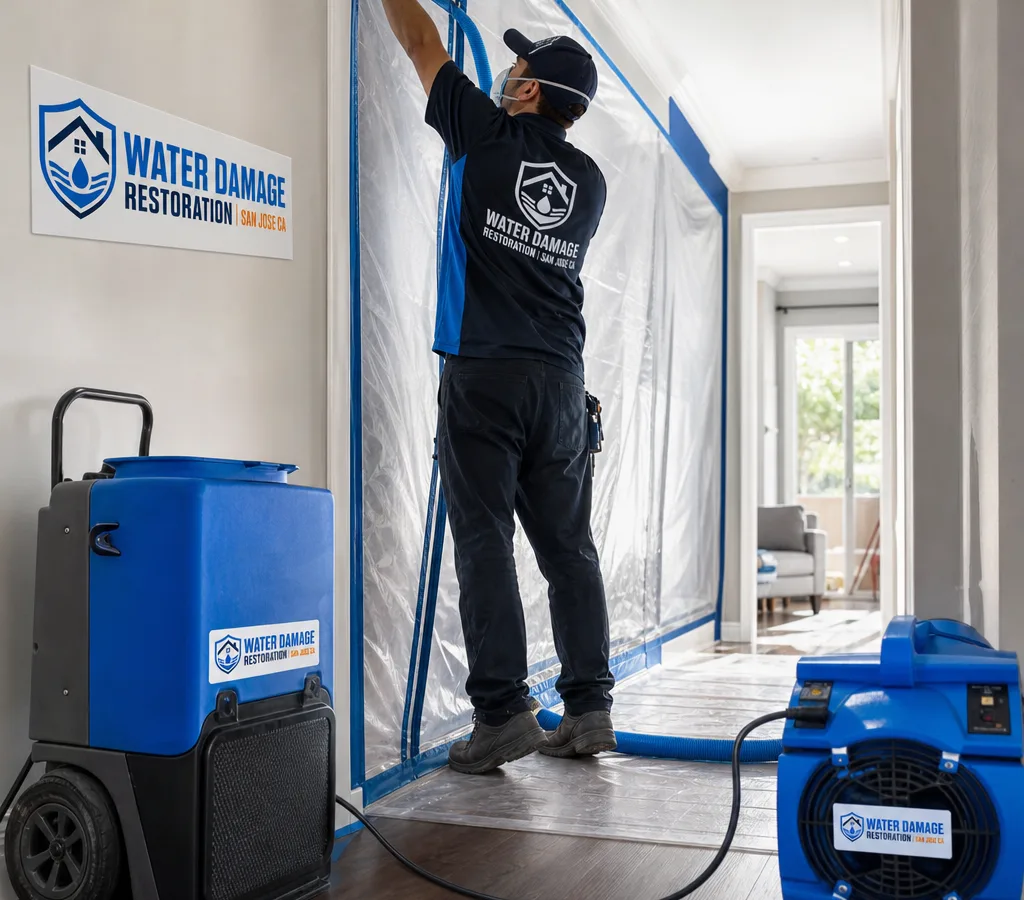
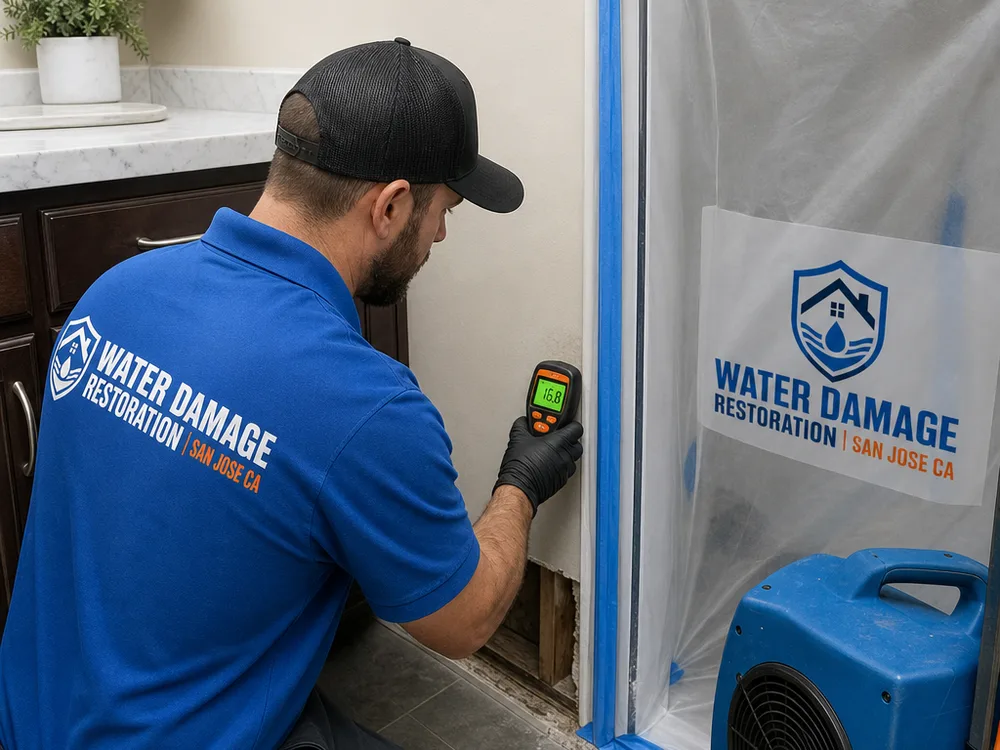
We isolate the work zone with plastic barriers and use HEPA-filtered negative air when needed, which helps keep spores and dust from drifting into other rooms during demolition and cleaning.
Serving San Jose, California & surrounding areas
24/7 Emergency Response
Mold remediation in San Jose
If you see staining, smell a musty odor, or had a recent leak, treat it as a time-sensitive problem. Our team contains the affected area, removes contaminated materials safely, and helps you get back to a clean, dry home with a documented plan you can trust.
Find the source before treating the surface
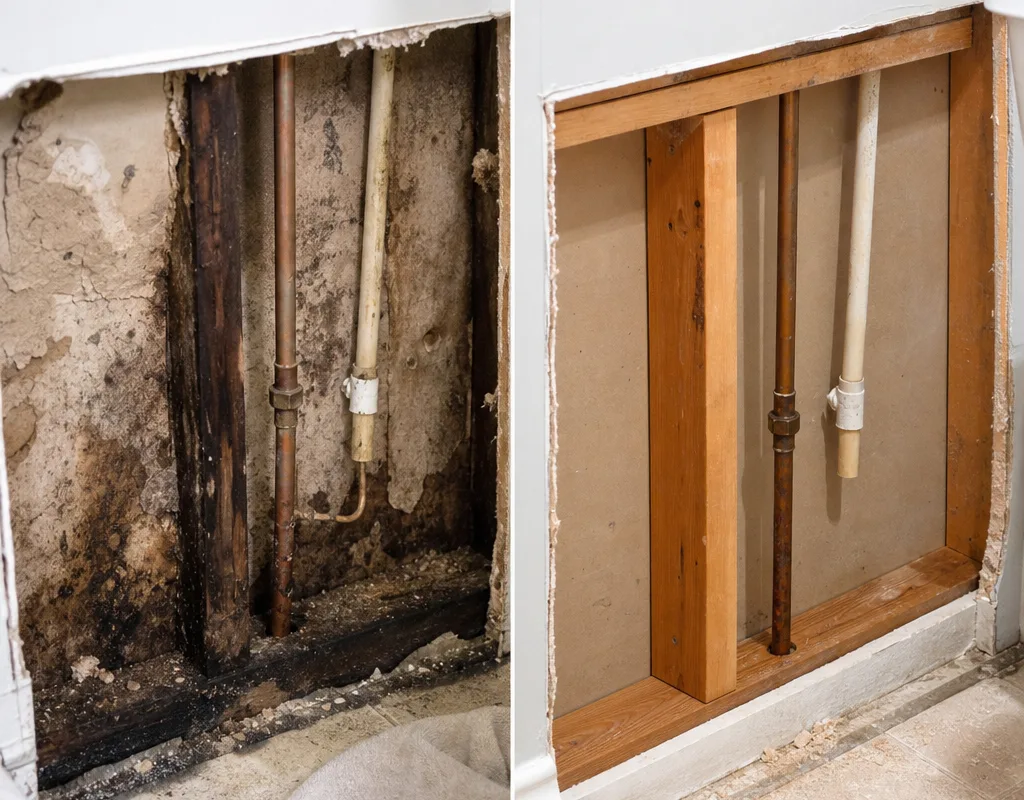
Mold remediation in San Jose is rarely just a surface cleaning job. Mold shows up because moisture is staying in building materials, often behind drywall, under flooring, around windows, or inside a ceiling after a slow plumbing leak.
Water Damage Restoration San Jose CA handles mold remediation San Jose property owners rely on when they want the work done safely and correctly: identify what is wet, stop the moisture path, isolate the area so spores do not spread, and remove affected materials based on condition and porosity.
In San Jose homes and condos, we often see issues in places that do not dry quickly: closets on exterior walls, bathrooms with weak exhaust, laundry areas, and garages converted into living space where ventilation and vapor control were not upgraded. If your mold started after a leak or backup, start with water damage restoration in San Jose so drying and mold control are coordinated, not handled as separate problems. Curious what that response typically runs? Read our guide to water damage restoration cost in San Jose.
Contain, remove, clean, and dry
We isolate the work zone with plastic barriers and use HEPA-filtered negative air when needed, which helps keep spores and dust from drifting into other rooms during demolition and cleaning.
We track moisture in drywall, framing, and subfloors with industry-standard meters and build a clear scope around what is actually affected, not guesses based on what is visible.
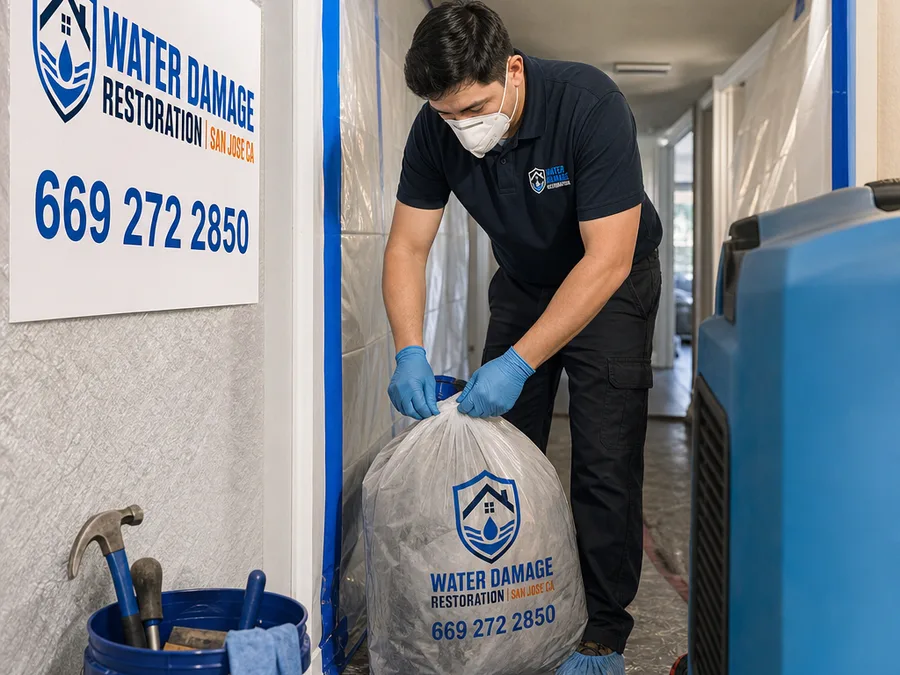
Porous materials that are moldy or water-damaged—often drywall, insulation, or carpet pad—are typically removed and bagged out. This is usually the safest path when growth is established.
After removal, we HEPA vacuum and clean remaining surfaces and surrounding ledges, gaps, and returns where settled particles collect. This step matters as much as demolition.
Dehumidifiers and air movers run until materials reach dry targets. If the moisture problem is not fixed, mold can return even after a thorough cleanup.
We leave the area clean and ready for rebuild, and we can coordinate the repair phase so you are not stuck with an open wall longer than necessary.
Neighborhood-aware inspection
Mold remediation is more predictable when you know the building style and the way moisture behaves in that space.
In downtown San Jose and newer infill condos, shared walls and tight building envelopes can keep humidity trapped. That makes bathrooms, laundry closets, and HVAC closets common problem areas when ventilation is limited.
In Willow Glen and other neighborhoods with older housing stock, we often find slow leaks that traveled through lath and plaster or older drywall layers, spreading further than the visible stain suggests.
In Almaden Valley and the foothill edges, occasional storm runoff issues and seepage can show up as damp lower walls or musty storage areas, especially when drainage is overwhelmed.
In North San Jose and commercial-adjacent areas, we see more slab-on-grade moisture and flooring-related issues. If flooring has cupped, lifted, or smells musty, we treat it as a sign to check subfloor conditions, not just the surface.
No matter the neighborhood, the decision point is the same: if you can smell mold, see recurring spotting, or have materials that stayed wet longer than a day, an on-site inspection is the fastest way to confirm the scope and prevent spread.
From inspection to repair-ready
The sequence keeps affected material controlled while addressing the moisture conditions that allowed growth.
We look for the moisture source, check adjacent rooms, and measure materials to understand how far moisture and potential growth may have traveled beyond what you can see.
Before removal starts, we outline what is being removed, what stays, and how the work area will be contained. For occupied homes, we plan traffic routes to reduce cross-contamination.
We isolate the affected zone, establish negative air when appropriate, and remove damaged porous materials in a way that limits dust and debris in the rest of the property.
We HEPA vacuum, detail clean, and run dehumidification or air movement as needed to reach dry conditions. If anything suggests continuing moisture, we adjust the plan before repairs begin.
Once the area is dry and clean, we help move the project into the repair phase so the space is restored, not left half-finished.
Planning the work
Mold remediation in San Jose typically ranges from about $1,500 to $6,500 for many residential jobs, with small, contained areas sometimes closer to $800 to $2,000 and larger multi-room projects reaching $8,000+ when demolition and rebuild are significant. Pricing depends on how far the growth spreads, what materials are affected (drywall, insulation, flooring), access to the area (crawlspace, attic), and how much drying equipment and containment is required. The exact cost is confirmed after an on-site inspection and a written scope.
Request Emergency ServiceAnswers before remediation begins
Most mold remediation projects take 1 to 3 days for containment, removal, and cleaning, then additional time if drying or rebuild is needed. A small bathroom or closet can sometimes be handled in a single day, while leaks that affected multiple rooms, cabinets, or flooring usually take longer because materials must dry to safe targets before repairs.
Sometimes, but only when the affected material is non-porous or the growth is truly on the surface and the moisture is resolved. Drywall and insulation are porous, and when they are moldy or stayed wet, removal is often the safest and most reliable approach compared to trying to treat through paint or patch over staining.
Often you can stay home if the affected area can be fully contained and there is a safe path in and out for workers and equipment. If the work involves a bedroom, a main hallway, extensive demolition, or someone in the home has respiratory sensitivity, temporary relocation for part of the work can be the better plan.
Testing is not always required to begin remediation, because visible growth and moisture damage already justify removal and cleaning. Testing can help when the source is unclear, symptoms are reported without visible signs, or a landlord, buyer, or insurer requires documentation, but the core fix still comes from stopping moisture and remediating affected materials.
Mold can return if moisture returns, so the lasting fix is controlling water and humidity. The remediation work focuses on removing affected materials, cleaning settled particles with HEPA methods, and drying the structure; if a leak continues, a shower pan fails, or ventilation stays poor, new growth can develop in the same places.
Stop the water source if it is active, avoid running fans that blow directly across suspect growth, and keep the area closed off as much as possible until it is assessed. If the leak was recent, quick drying can prevent a small problem from turning into a demolition job, so scheduling an inspection early is usually the best next step.
Start with an on-site inspection
Tell us what you are seeing and where it started. We will schedule an on-site inspection in San Jose, explain what needs to be removed versus dried and cleaned, and provide a written scope you can use to move forward with confidence.