How long the water sat
Water that is extracted within hours usually affects fewer materials. The longer it sits, the more it wicks into drywall, insulation, subfloors, and cabinetry — expanding both the drying scope and the demolition list.
Serving San Jose, California & surrounding areas
24/7 Emergency Response
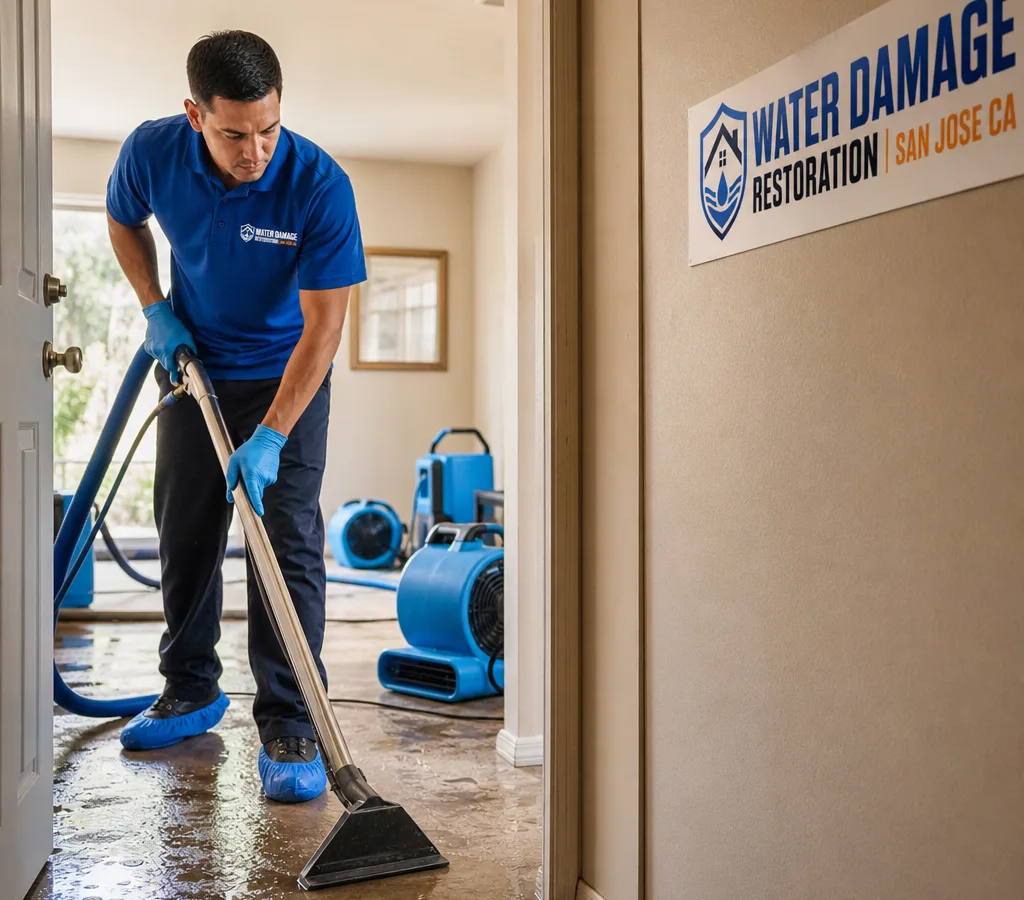
Water damage restoration in San Jose, CA
Fast response for leaks, floods, and burst pipes. We stop the water, dry the structure, and document the job so you can make smart decisions and limit long-term damage.
Planning the mitigation work
Costs run from about $730 to $5,800 depending on the type of loss. The table below shows typical ranges by job type, along with the insurance provision that usually applies to each.
| Job type | Typical range | Insurance provision that usually applies |
|---|---|---|
| Emergency standing water pumping and vacuuming | $730 – $1,590 | Standard policy |
| Appliance line leak or water heater rupture | $1,030 – $2,320 | Standard policy |
| Frozen or burst pipe in a wall or ceiling | $1,340 – $3,170 | Sudden and accidental discharge |
| Flooded basement or sump pump failure | $1,730 – $3,850 | Water backup endorsement |
| Sewage drain backup or groundwater ingress | $2,500 – $5,800 | Sewer backup rider required |
Certified restoration labor in Santa Clara County runs about $127 per hour. Per-square-foot rates also vary by loss source: a clean water leak averages about $5.27 per square foot, basement flooding about $7.43, a frozen pipe burst about $8.37, and a sewage backup about $11.81.
Paying for the work
For a covered claim, most homeowners pay their deductible rather than the full restoration figure. The insurer typically pays the approved mitigation and repair costs above the deductible amount, and documentation from the job — moisture readings, photos, and a written scope — supports that process.
Whether a specific loss is covered depends entirely on the individual policy, its endorsements, and the cause of the damage. Coverage should always be confirmed directly with your insurer or adjuster before any payment expectations are set. Nothing on this page should be read as a promise or guarantee that a particular loss will be covered.
Cost drivers
Water that is extracted within hours usually affects fewer materials. The longer it sits, the more it wicks into drywall, insulation, subfloors, and cabinetry — expanding both the drying scope and the demolition list.
Clean supply water is the simplest to handle. Gray water from appliances adds cleaning steps, and black water from sewage requires containment, sanitizing, and removal of porous materials — each tier raises the cost.
Air movers and dehumidifiers run per day, and most jobs need 3 to 5 days of equipment. Denser materials, cooler spaces, or a late start can extend that, adding labor and equipment charges.
When moisture is trapped behind baseboards, under flooring, or inside wall cavities, selective removal and disposal add to the total. Jobs that dry in place without demolition stay at the lower end.
Crawlspaces, attics, tight utility closets, and multi-story buildings without service elevators slow the crew down and complicate equipment placement, which increases labor hours on the same scope.
Stabilize, extract, dry, and verify
Water damage in a San Jose CA home or business is rarely just a puddle. Water wicks under baseboards, soaks insulation, swells cabinets, and can reach wall cavities before you see the full spread. The goal in the first hours is simple: stop the source, remove water, dry the structure with controlled airflow and dehumidification, and verify results with moisture readings.
Water Damage Restoration San Jose CA handles the full water damage San Jose process for residential and commercial properties: emergency mitigation, drying, and the practical next steps that follow. If you are dealing with a supply line break, an overflowing fixture, storm intrusion, or a slow leak that finally showed up on the ceiling, we will help you stabilize the property and reduce the risk of secondary issues like odor, staining, and microbial growth.
If you are comparing providers, start with response time and documentation. A professional mitigation team should be able to explain what category of water you are dealing with—clean, gray, or black—what materials are affected, what equipment is needed, and how they will confirm drying targets. For a broader overview of local help and response options, you can also see water damage restoration in San Jose.
Immediate protection and complete mitigation
We help you isolate the source—supply line, appliance, roof entry, or drain backup—check for electrical hazards in wet areas, and recommend the safest immediate actions before drying begins.
High-volume extraction, air movers, and dehumidifiers are placed based on materials and containment needs, then adjusted using moisture mapping rather than guesswork.
We track affected areas with meters and notes so you have a clear scope of what was wet, what was removed, and what was dried. This also supports insurance conversations when applicable.
When drywall, insulation, or flooring cannot be dried to a safe standard, we remove only what is necessary to access trapped moisture and prevent hidden damage from lingering.
If the loss involves gray or black water, we use appropriate cleaning steps and containment practices to reduce cross-contamination and make the space safe to re-occupy.
Once the structure is dry, we help you understand what repairs are next, what can wait, and what should be addressed quickly to avoid warping, cracking, or finish failures.
Neighborhood-aware drying plans
San Jose properties vary a lot by neighborhood and building type, and that changes how water spreads and how drying is set up.
In Downtown San Jose, older multi-unit buildings and mixed-use spaces often have shared walls and stacked plumbing. A leak on one floor can impact units below, so fast moisture mapping and communication matter.
In Willow Glen, you see many older homes with additions or remodeled kitchens and baths. Transitions between old and new materials can hide wet areas, so we verify behind baseboards and at flooring edges.
In Almaden Valley, larger homes can mean longer plumbing runs and more square footage to dry when a supply line breaks. Equipment counts and drying time depend on what materials were saturated.
In Evergreen, newer construction can still take on significant damage, especially when water gets beneath engineered flooring or into insulation. Drying targets have to be confirmed with readings, not surface feel.
Across San Jose, any job can involve garages, crawlspaces, and attics. Those areas are easy to overlook and often hold moisture longer, so we include them in the inspection and drying plan.
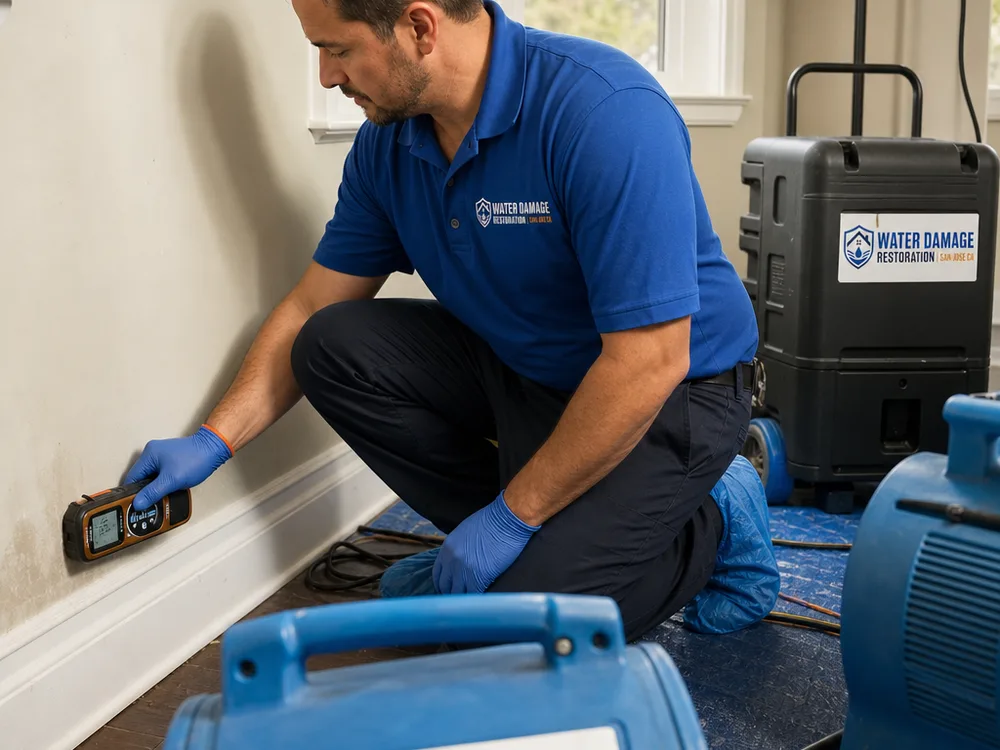
From first call to dry standard
Each step is guided by the water source, affected materials, contamination level, and verified moisture readings.
We ask where the water is coming from, what areas are wet, and whether power or sewage is involved. If it is safe, we will guide you on simple steps to limit spread until the crew arrives.
We identify affected materials, check for migration into adjacent rooms, and determine the water category. This drives containment, cleaning needs, and what can be dried versus removed.
Standing water is extracted first. Then we set air movers and dehumidifiers to control evaporation and humidity, with containment when needed to keep unaffected areas clean.
Drying is adjusted based on moisture readings, not a fixed timer. We track progress and document when materials reach dry standard so repairs can start on solid footing.
When drying is complete, we provide a summary of what was done and what comes next. If you are filing a claim, we keep the job notes and photos organized to support the process.
Answers before mitigation begins
Start mitigation as soon as the water source is controlled because moisture can move into drywall, insulation, and flooring within hours. The sooner extraction and dehumidification begin, the easier it is to limit swelling, staining, and odors, and to reduce the chance of microbial growth in wall cavities.
First, stop the water at the fixture shutoff or main if it is safe, and avoid wet electrical areas. If you can do so safely, move small valuables off wet floors, blot standing water with towels, and avoid running HVAC that could circulate humidity or odor. Leave wet materials in place until they are assessed so the scope is accurate.
Sometimes, yes, if the water is clean and materials can reach dry standard with proper airflow and dehumidification. If moisture is trapped behind drywall, under cabinets, beneath engineered flooring, or inside insulation, selective removal may be required to access wet cavities and prevent hidden damage from lingering.
Yes. Losses involving gray or black water require containment, proper cleaning, and removal of materials that cannot be safely sanitized, such as porous items in direct contact. The approach is different from a clean-water supply leak because the goal includes contamination control, not only drying.
Coverage depends on your policy and the cause of loss. Sudden events like a burst pipe are often handled differently than long-term seepage or maintenance-related leaks. We document affected areas, equipment placement, and moisture readings so you have clear records when you speak with your adjuster.
Most structural drying takes about 3 to 5 days, but timelines vary with the amount of water, material type—drywall, hardwood, slab, or carpet—and how quickly the job started. We use moisture monitoring to confirm progress and to decide when equipment can be removed.
Mitigation is the immediate work to stop the loss, remove water, dry the structure, and prevent secondary damage. Rebuilding is the repair phase afterward, such as replacing drywall, baseboards, flooring, cabinets, or paint. A clean mitigation closeout makes rebuilding faster and more predictable.
Start with a moisture inspection
Tell us what happened and what areas are affected. We will respond quickly, inspect for hidden moisture, and give you a clear scope so you can protect the property and move forward with the right next steps.